
Ever stood in a beauty aisle, surrounded by products with labels that feel like a foreign language? Words like “non-comedogenic” and “hyaluronic acid” can leave anyone’s head spinning. But don’t worry.
You’re not alone.
This guide is here to decode all that jargon. It’s a map through the confusing world of cosmetics, turning uncertainty into confidence. Why trust this guide?
I love making beauty simple and accessible (cutting) through the noise. With this beauty terms glossary, you’ll finally understand what you’re buying. You’ll choose products that suit your needs, not just what sounds fancy.
Ready to dive in?
Beauty Lingo: The Key to Better Choices
Ever felt lost in a sea of beauty jargon? Understanding a beauty terms glossary can change that. Once, I bought an expensive moisturizer, only to realize it had ingredients that made my skin break out.
Knowing cosmetic terms could have saved me a rash and some cash. When you recognize what’s inside those pretty packages, you’re less likely to fall for flashy marketing that doesn’t suit your skin.
Curious about history evolution of makeup? It shows how beauty trends shape our choices today. Pro tip: Always check ingredient lists before buying.
Doesn’t it feel empowering to know you’re making informed choices? That confidence comes from understanding terms like “non-comedogenic” and “hypoallergenic.” These words aren’t just fluff; they help you steer clear of irritation or allergies. You won’t need to rely on dubious ads when you know what works for you.
Your skin will thank you.
Decoding Skincare Labels: From Actives to Acids
Navigating skincare labels feels like cracking a secret code. You ask, what do these terms even mean? Let’s break it down.
Active Ingredients
These are the stars of your skincare show. They do the heavy lifting. Retinol, for instance, is a form of Vitamin A that helps reduce wrinkles. Then there’s Vitamin C, a powerhouse for brightening your skin.
And let’s not forget Salicylic Acid, a favorite for fighting acne by exfoliating the skin and unclogging pores. If you’re interested in more, a glossary guide to commonly used beauty terms can be handy.
Non-Comedogenic and Hypoallergenic
These sound like scientific jargon, right? Non-comedogenic products won’t clog your pores, perfect for oily and acne-prone skin. Hypoallergenic means a formula less likely to cause allergies (great for sensitive skin types).
But remember, it’s not a guarantee against reactions.
Hydrating vs. Moisturizing
Here’s where it gets tricky. Hydrating means adding water to the skin. Think of Hyaluronic Acid here, drawing moisture from the environment. Moisturizing, on the other hand, is about trapping that water in. Ceramides and oils are your go-tos for this task.
They create a barrier to seal in hydration.
Sun Protection Decoded
Ever ponder SPF? It stands for Sun Protection Factor, indicating how long a sunscreen can protect you from UVB rays. But don’t stop there.
Broad-spectrum sunscreens cover both UVA and UVB rays, key for complete protection. UVA rays penetrate deeper into the skin, leading to aging. UVB rays cause sunburn.
You need protection from both.
With all this in mind, you’re better equipped to tackle the skincare aisle. Know what these terms mean, and you’re already ahead in the game.
Makeup Must-Knows: Finishes and Techniques
When it comes to makeup, the jargon can be mind-numbing. Ever wondered what a “matte” finish is or why everyone goes on about “dewy” skin? Let’s break down these beauty terms with our little glossary.
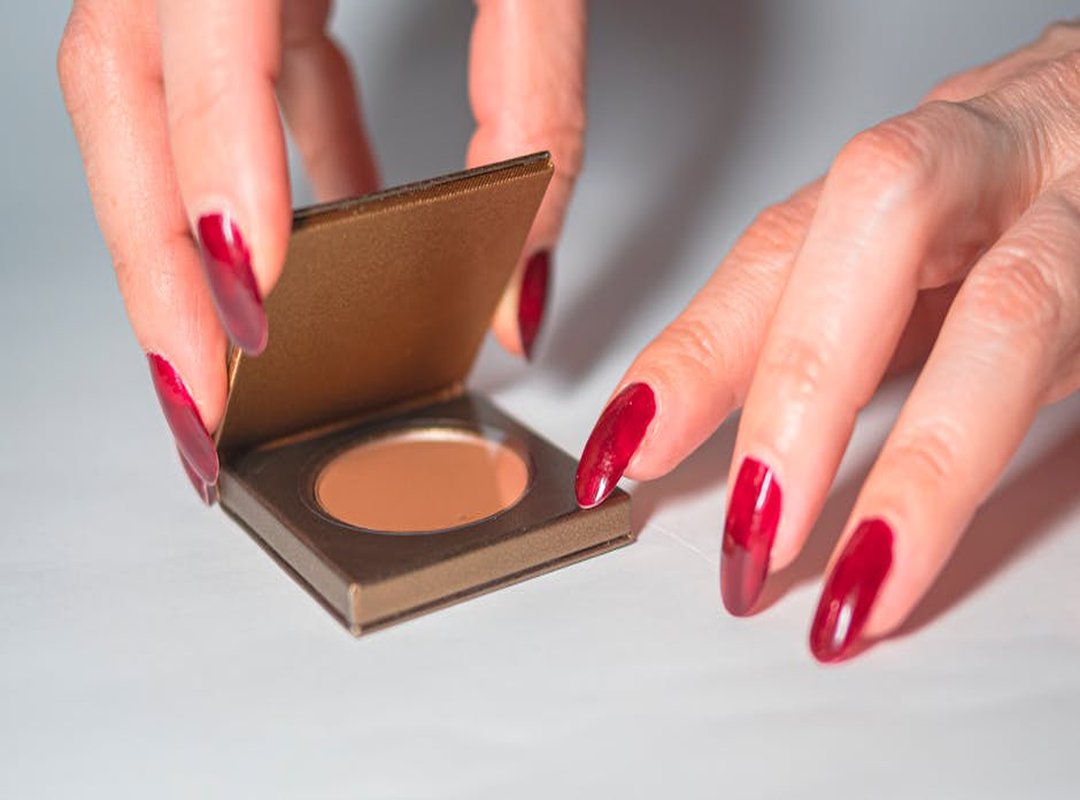
Matte finishes leave your skin shine-free. Great for oily skin or when you want a polished look. Think of it as the opposite of shiny (a pro tip for hot, humid days). Dewy, on the other hand, gives you that fresh, just-had-a-facial glow. Perfect for dry skin or if you’re channeling your inner J.Lo. Then there’s satin. A bit more natural, sitting between matte and dewy. Luminous? It’s the high beam of finishes, like you’ve been kissed by the light.
Now, coverage levels. Sheer is light and lets your natural skin peek through. If you want a barely-there look, this is for you.
Medium coverage is the Goldilocks of the lot (just) right for most people looking to even out skin tone without masking it completely. And full coverage? That’s your secret weapon for a flawless complexion when you need to hide everything that needs hiding.
Techniques can sound like a foreign language. Baking is not for cookies (it’s) setting your concealer with powder and letting it sit like icing on a cake. Contouring?
That’s about creating shadows to sculpt your face. Strobing focuses on highlighting to bring out your features. And that buzzword, cut crease?
It’s an eyeshadow technique where you define the crease of your eyelid for a dramatic look (think of a bold, precise line).
Want more takeaways into beauty and sustainability? Check out this guide. Whether you’re a beginner or seasoned pro, knowing these terms can transform your makeup game.
Who needs a degree in beauty when you’ve got this cheat sheet?
Decoding Beauty Claims: Clean, Natural, and More
Ever looked at a beauty label and wondered what the heck it means? You’re not alone. The terms “clean” and “natural” seem to pop up everywhere, but what do they actually mean?
Spoiler: not much, sometimes.
“Clean beauty” isn’t a regulated term, which means brands can slap it on anything. Generally, it implies a product is free from certain controversial ingredients. But which ones?
That’s up to the brand. So, do yourself a favor: check the brand-specific standards before buying. (Pro tip: Some “clean” labels avoid parabens, sulfates (stuff) like that.)
Now, let’s talk “natural” vs. “organic.” These words aren’t interchangeable, though they often get used that way. “Natural” can mean the product has some naturally derived ingredients. Or it can mean nothing at all. Seriously, it’s that vague. Organic usually packs more punch, requiring certification.
Look for the USDA Organic seal if you’re serious about this. Without it, “organic” might just be a pretty word on the label.
Let’s not forget “cruelty-free” and “vegan.” Two terms that are often mixed up. “Cruelty-Free” means no animal testing. You might spot a Leaping Bunny logo if it truly is cruelty-free. “Vegan,” on the other hand, means no animal-derived ingredients. A product can be vegan but tested on animals or cruelty-free but contain honey.
Yep, they’re not mutually exclusive.
So, what’s an informed consumer to do? Keep a beauty terms glossary in your back pocket (figuratively speaking). It’s about knowing what these words mean and identifying what matters to you.
Remember, labels can be misleading. Don’t fall for the marketing hype. Read between the lines, check for certifications, and you’ll be just fine.
Armed with this knowledge, you’ll see past the smoke and mirrors of beauty claims.
Master Beauty Like a Pro
You’ve made it. Remember how overwhelming the beauty world felt? All those terms and jargon?
That confusion ends here. Understanding the beauty terms glossary is your secret weapon. It’s how you build a routine that truly works.
No more guesswork. You’re empowered now.
So, what’s next? Use this newfound knowledge on your next beauty purchase. Dive deeper into our site for even more takeaways.
This is your chance to shop with confidence. Ready to take control? Visit janlersont.com for top-rated beauty stories and tips.
You deserve a beauty routine that’s as unique as you are. Go on, explore!
 There is a specific skill involved in explaining something clearly — one that is completely separate from actually knowing the subject. Linda Montaguestones has both. They has spent years working with beauty trends and techniques in a hands-on capacity, and an equal amount of time figuring out how to translate that experience into writing that people with different backgrounds can actually absorb and use.
Linda tends to approach complex subjects — Beauty Trends and Techniques, Everyday Beauty Hacks, Makeup Routine Inspirations being good examples — by starting with what the reader already knows, then building outward from there rather than dropping them in the deep end. It sounds like a small thing. In practice it makes a significant difference in whether someone finishes the article or abandons it halfway through. They is also good at knowing when to stop — a surprisingly underrated skill. Some writers bury useful information under so many caveats and qualifications that the point disappears. Linda knows where the point is and gets there without too many detours.
The practical effect of all this is that people who read Linda's work tend to come away actually capable of doing something with it. Not just vaguely informed — actually capable. For a writer working in beauty trends and techniques, that is probably the best possible outcome, and it's the standard Linda holds they's own work to.
There is a specific skill involved in explaining something clearly — one that is completely separate from actually knowing the subject. Linda Montaguestones has both. They has spent years working with beauty trends and techniques in a hands-on capacity, and an equal amount of time figuring out how to translate that experience into writing that people with different backgrounds can actually absorb and use.
Linda tends to approach complex subjects — Beauty Trends and Techniques, Everyday Beauty Hacks, Makeup Routine Inspirations being good examples — by starting with what the reader already knows, then building outward from there rather than dropping them in the deep end. It sounds like a small thing. In practice it makes a significant difference in whether someone finishes the article or abandons it halfway through. They is also good at knowing when to stop — a surprisingly underrated skill. Some writers bury useful information under so many caveats and qualifications that the point disappears. Linda knows where the point is and gets there without too many detours.
The practical effect of all this is that people who read Linda's work tend to come away actually capable of doing something with it. Not just vaguely informed — actually capable. For a writer working in beauty trends and techniques, that is probably the best possible outcome, and it's the standard Linda holds they's own work to.