
Beauty is more than trends and tutorials—it’s about understanding what truly works for you and why. If you’re here, you’re likely looking for fresh beauty inspiration, practical techniques, and real guidance you can actually use in your daily routine. This article delivers exactly that: spotlight-worthy trends, step-by-step makeup insights, skincare regimen tips, and clever everyday hacks designed to elevate your look without overwhelming your schedule.
We go beyond surface-level advice by exploring the psychology of beauty perception—how color, texture, symmetry, and self-confidence influence the way beauty is seen and felt. By combining trend analysis with practical application, this guide helps you make informed choices that suit your features, lifestyle, and goals.
Our insights are grounded in ongoing research, expert-backed techniques, and careful analysis of evolving beauty movements. Whether you’re refining your signature look or experimenting with something bold, you’ll find inspiration and actionable advice tailored to modern beauty seekers.
Beauty feels personal, but your brain runs hidden code. Evolution favors symmetry (a health cue), while culture rewards trends—think Barbie vs. Wednesday Addams. A vs B: Natural features vs filtered perfection. One signals authenticity; the other signals status and digital polish. The psychology of beauty perception explains how familiarity bias makes average faces appealing, while halo effect lets attractive people seem smarter (even when they’re not).
Critics argue standards are purely social constructs. Yet studies show infants prefer symmetrical faces (Langlois et al., 1991). Biology sets the stage; culture writes the script. Understanding both helps you choose influence over insecurity.
The Evolutionary Blueprint: Why We’re Wired to Love Symmetry
Let’s start with something almost unfair: we’re biologically biased. Long before contour kits and ring lights, our ancestors were scanning faces for clues about survival. Symmetry—when one side of the face closely mirrors the other—became shorthand for genetic stability and developmental health. Studies suggest that facial symmetry correlates with resistance to disease and environmental stressors (Rhodes et al., 2001). In other words, balance signaled strong genes. No wonder our brains still pause for it.
But here’s where it gets interesting. Research on the “averageness effect” shows that composite faces—blends of many individuals—are often rated as more attractive than any single face (Langlois & Roggman, 1990). Average doesn’t mean boring; it signals genetic diversity and resilience. That’s why universally flattering makeup techniques work so well. Softly blended contour, balanced brows, even skin tone—they nudge features toward harmony. It’s the psychology of beauty perception playing out in your everyday routine.
Then there’s neoteny: youthful traits like larger eyes, fuller lips, and smaller noses. Across cultures, these features are linked to vitality and fertility. Evolutionarily speaking, youth meant reproductive potential. Today, it means highlighter in the inner corners and lip gloss that catches the light (yes, trends come and go, but glow sticks around).
Of course, some argue beauty is entirely cultural. And sure, trends shift—remember ultra-thin brows? Still, I believe biology lays the groundwork while culture decorates it. Why else would “flawless” skin—clear, smooth, luminous—remain timeless?
Ultimately, our modern beauty rituals are ancient instincts with better lighting.
The Mind’s Shortcuts: How Cognitive Biases Shape Attraction
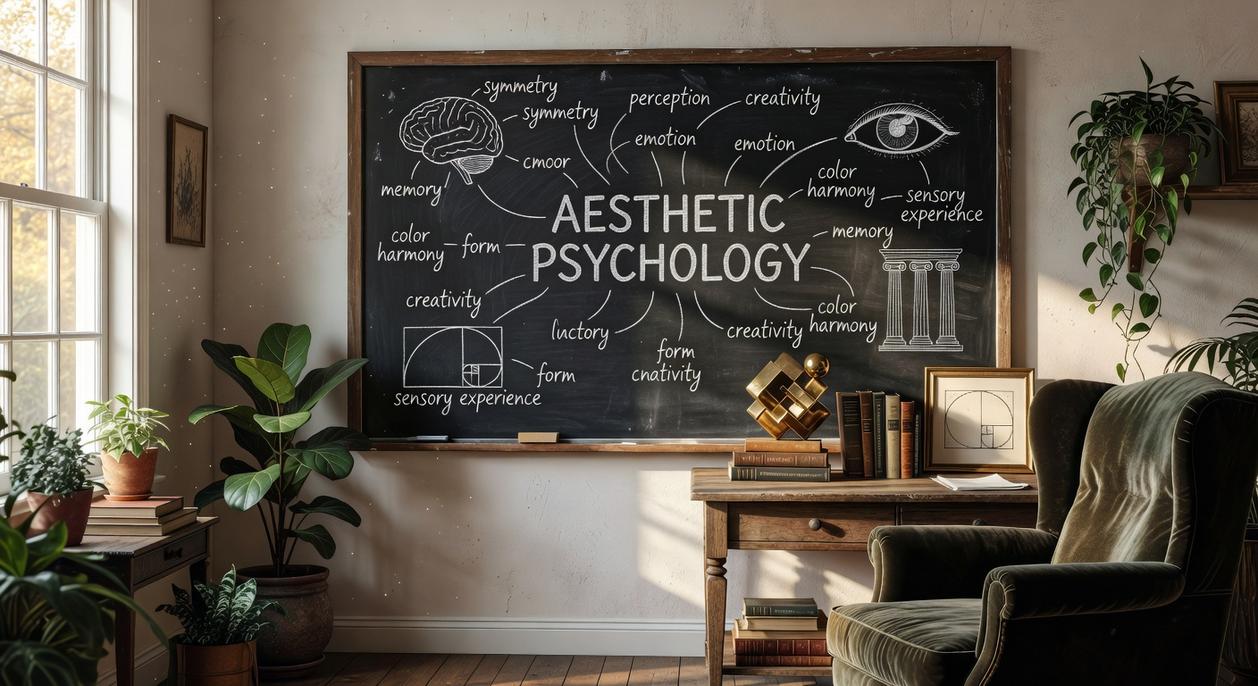
Our brains love shortcuts. Think of them as mental autopilot settings—efficient, helpful, and occasionally wildly misleading.
The Halo Effect is one of the most powerful. It’s a cognitive bias where we assume that because someone is physically attractive, they must also be kind, intelligent, or talented. In other words, beauty becomes a spotlight that makes every other trait glow brighter. Celebrity culture runs on this. A charismatic actor is suddenly seen as wise. A stunning influencer becomes a “trusted” wellness expert. Marketing does the same: pair a product with an attractive face, and we instinctively assume quality (even when we know better). Some argue we’re too media-savvy to fall for this. Research suggests otherwise—attractiveness consistently influences perceived competence and trustworthiness (Dion, Berscheid & Walster, 1972).
The Mere-Exposure Effect works differently. It’s like hearing a song on repeat—at first it’s background noise, then it’s your favorite track. The more we see certain faces or beauty trends on social media, the more attractive they seem. This is how bold brows, glass skin, or specific facial proportions suddenly feel “ideal.” Familiarity breeds liking (Zajonc, 1968). That’s psychology of beauty perception in action.
Familiarity and Attraction goes deeper. We’re often drawn to features that echo our upbringing—faces that resemble family members or community norms feel comfortable. Our “type” isn’t random; it’s patterned by exposure.
Practical Takeaway
Before embracing a trend, pause. Do you genuinely love it—or has repetition polished it into appeal? Questioning your preferences builds awareness, just like choosing mindful habits in [sustainable beauty how to build an eco friendly routine]. (Pro tip: take a short break from trend-heavy feeds and notice what still resonates.)
The Cultural Mirror: How Society Writes the Rules of Beauty
Beauty doesn’t emerge in a vacuum; it’s drafted by culture, edited by media, and approved by your group chat. First, consider how movies, magazines, and now TikTok loops quietly hand us a template. The camera lingers on certain body types, flawless skin, and symmetrical faces—features often linked to the psychology of beauty perception, which studies how we instinctively respond to visual cues. Over time, repetition turns preference into “normal.” (If every rom-com lead looks the same, we start thinking love requires perfect lighting.)
From Seoul to São Paulo: Beauty Isn’t One-Size-Fits-All
However, travel a little—physically or digitally—and the script flips. In South Korea, luminous “glass skin” reigns supreme. In parts of Brazil, curves are celebrated. Meanwhile, skin tone preferences vary dramatically across regions, shaped by history and class dynamics (World Health Organization reports note the global rise in skin-lightening products). Clearly, beauty is subjective, not universal.
Then there’s your inner circle. Friends influence everything from bold eyeliner phases to minimalist skincare routines. Social belonging matters; we adapt to fit in.
Finally, algorithms accelerate it all. Social media spots a micro-trend, amplifies it globally, then replaces it by Tuesday. Blink, and your contour technique is vintage. Funny how beauty “rules” feel eternal—until the next scroll.
The Role of Memory shapes attraction more than we admit. If a warm teacher had bright red lipstick, you might forever link that shade with kindness. Conversely, a harsh comment tied to a hairstyle can sour it. Notice patterns: write three features you love and trace the memory behind each.
Self-esteem acts like a filter. When confidence dips, mirrors feel cruel; when it rises, flaws soften. Build it daily—list one trait you appreciate, practice affirmations, curate supportive feeds.
Your aesthetic isn’t random. It’s the psychology of beauty perception in action, a tapestry of memories, culture, and self-worth you can refine.
Beauty isn’t an objective fact; it’s a layered mix of evolution, cognitive shortcuts, cultural conditioning, and personal history. The psychology of beauty perception shows how quickly our brains label faces and bodies as attractive or not—often before we’re aware of it. No wonder the pressure feels invisible yet constant.
Some argue standards motivate self-improvement. But when ideals narrow, confidence shrinks. Understanding these forces is the first step toward freedom. Your standard can be self-defined. Question the media you consume, notice who benefits from your insecurity, and practice seeing beauty in wider forms—including your own. That shift changes everything for good.
You came here looking for clarity—real, practical insight into beauty trends, techniques, and routines that actually make a difference. Now you understand how small adjustments in application, smarter skincare choices, and a deeper awareness of the psychology of beauty perception can completely transform the way you look and feel.
Beauty can feel overwhelming. Endless products. Conflicting advice. Trends that change overnight. But the truth is simple: when you understand what enhances your natural features and why it works, you stop guessing and start glowing with intention.
Here’s the key takeaway—confidence isn’t created by more products. It’s created by informed choices and consistent habits. Apply what you’ve learned. Refine your routine. Experiment with purpose, not pressure.
Elevate Your Everyday Beauty
If you’re tired of wasting money on trends that don’t suit you and routines that don’t deliver, it’s time to upgrade your approach. Discover proven beauty techniques, trend insights, and skincare strategies trusted by thousands of readers who rely on us for clear, actionable guidance.
Don’t let confusion hold back your glow. Explore more expert-backed beauty insights now and start building a routine that truly works for you.